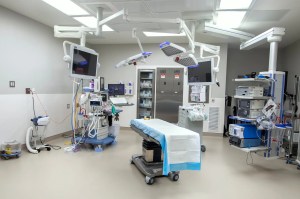
After selecting your surgeon, the next most important step for patients scheduled to have same-day surgery in an ambulatory facility is to evaluate this facility. Patients almost always neglect this step in the hectic run-up to their procedures because they don’t know what questions to ask and why it’s important to do so.
Ambulatory surgery centers (ASCs) range from sophisticated outfits that look and feel like hospital operating rooms where procedures such as joint replacements and even some heart procedures are performed, to those that are purpose-built for less complex procedures like cataract surgeries and endoscopies. These days, Medicare is allowing more complex procedures to be performed in ASCs, of which almost two-thirds are owned by physicians themselves without any hospital oversight.1
ASCs differ from hospital operating rooms in a couple of important ways. Most obviously, if you experience a serious medical emergency, you will have to be transported to a hospital. Less obvious differences have to do with the fact that such facilities may lack checks and balances which are present in hospital settings. For example, in hospitals, surgical instruments and devices undergo many levels of cleaning, maintenance and inspection. In outpatient facilities, this responsibility often falls to a single employee or contractor. And, compared to hospital settings, ASC staff members are generally not empowered or encouraged to speak up if they see something amiss. (The lack of a strong patient safety culture in many ASCs concerns me so much that I devoted a blog post to it.)
ASCs also have looser reporting requirements than hospitals. In fact, 17 states don’t even require ASCs to report adverse events to the authorities.4 Here in California, ASCs are supposed to report incidents, but, according to the California Health Care Foundation, because of a legal decision that removed some reporting requirements, “little is known about the volume of procedures, type of procedures, and financial operation of the vast majority of these facilities.”2 In my over 20 years supporting surgeries performed in ASCs, I can tell you that many ASCs I worked in failed to report incidents such as post-surgical infections, unplanned hospital transfers, and narcotic thefts to the proper authorities. I attribute this to the weak patient safety cultures and protocols that exist in poorly-run ASCs — problems that start at the top, with owners that are so greedy or lazy or negligent that they simply don’t care.
Not all surgery centers in the U.S. are required to report to state or federal organizations. In New Jersey, for example, ASCs with only one operating room are not licensed by the state Department of Health, and therefore are not obligated to submit information on patient mortality or other events. These surgery centers are instead overseen by the licensing board for doctors.
Definitive Healthcare [October 2019]. Why Some Patients Face Higher Risks at Ambulatory Surgery Centers. (link)
It’s important to say that the vast majority of ASCs are safe and properly managed. But not all. Accreditation agencies are charged with ensuring the safety of ASCs, but there are issues here that you need to be aware of. First, accreditation agencies almost never perform surprise inspections, opting instead to schedule their site visits well in advance. And here in California, in 2011 the state allowed for-profit accreditation agencies to oversee ASCs. Since these private accreditation agencies are paid by the surgery center owners themselves, this raises a a conflict of interest concern. After California privatized surgery center accreditation, watchdogs and investigative reporters have repeatedly alerted the public of terrible mishaps that have even led to patient deaths. Kaiser Health News describes this situation as “a troubling legacy of laxity.”3
If your surgeon wants to use an ASC for your procedure, here are the steps I advise you to take:
- Determine who owns the surgery center: a hospital system, your surgeon, or a different physician or physician group?
- Ask if the facility is in good standing with the agency that accredits it, and whether this agency is Medicare-approved (such agencies have the most stringent standards). Here in California, the Medical Board operates a searchable database for this purpose, but some states don’t make this information easy to find.
- Visit the facility and meet with the Director of Nursing (DON). Ask the DON if they’re a part-time contractor or full-time employee of the surgery center, and request a tour of the operating room. Does it look clean and organized to you?
- Ask the DON when the last accreditation inspection took place and whether any corrective actions were required afterwards. Inquire about safety protocols, emergency procedures, and the patient recovery process: Will both the surgeon and anesthesia provider remain at the facility until you’re fully awake? (If your anesthesia provider is a nurse anesthetist and not a medical doctor, then make sure your surgeon will stay put until you’re awake and ready for discharge.)
After doing your due diligence, if something doesn’t feel right, you can request that your procedure take place in an operating room at the hospital where your surgeon has privileges. Be aware that your surgeon or their staff might try persuading that the ASC your surgeon owns or uses most often is your best option. Don’t feel pressured or guilty if you feel otherwise. It’s your body, and this decision is yours and yours alone.
Remember that most private surgery centers are well managed and perfectly safe. Still, it’s best to trust but verify. Good luck!
Nothing in this article should be relied on for medical or legal advice.
Footnotes
1 Badlani N. Ambulatory surgery center ownership models. J Spine Surg. 2019 Sep;5(Suppl 2):S195-S203. doi: 10.21037/jss.2019.04.20. PMID: 31656875; PMCID: PMC6790806.(link)
2 [No author]. (February 2018). California’s Ambulatory Surgery Centers: A Black Box of Care. Retrieved from http://www.chch.org (link)
3 Jewett, Christina. (20 September 2018). Despite Red Flags at Surgery Centers, Overseers Award Gold Seals. Retrieved from http://www.khn.org (link)
4 [No author]. (2019) Q&A with Bill Prentice, CEO Ambulatory Surgery Center Association. Retrieved from http://www.ascassociation.org (link)
Copyright © 2025 by Monica Berlin
 BerlinWrites